America’s 2026 Academic Year: Key Dates, Deadlines, and Success Tips
Introduction
For many students—especially first-time college entrants, transfer students, and international learners—the American education system can feel like a maze. Unlike countries that operate on a single national academic calendar, the United States uses multiple academic structures. Some institutions follow a semester system, others operate on quarters or trimesters, and start dates can vary significantly depending on the state, institution type, and even program of study. Understanding this complexity is the first and most critical step to academic success.
As the 2026 academic year approaches, students face a landscape shaped by evolving academic policies, increased competition, digital learning integration, and higher expectations for time management and self-direction. However, these challenges also create opportunities. With the right planning, awareness of key dates, and proactive preparation, 2026 can be one of the most productive and successful academic years yet.
This guide is designed to help students make sense of the most important academic milestones in the 2026 U.S. academic calendar. Whether you are a high school senior preparing for college, a continuing undergraduate, a postgraduate student, or an international learner adjusting to the American system, knowing when semesters start, when breaks occur, and when critical academic pressure points arise allows you to plan strategically rather than react under stress.
The goal is not merely to survive the academic year, but to thrive within it. By understanding the structure of the year early on, students can align coursework, employment, internships, travel plans, and personal commitments more effectively. In short, a well-understood calendar becomes a powerful academic tool.
Key Dates for 2026: The “Big Rocks” of the Academic Calendar
While exact dates may differ slightly between institutions, most U.S. colleges and universities follow a broadly similar rhythm. These major periods—often referred to as the “big rocks” of the academic calendar—shape the flow of the entire year. Knowing them in advance helps students anticipate high-pressure periods and plan rest, revision, and recovery time accordingly.
Winter and Spring Term Start: Early January 2026
For institutions operating on a semester system, the spring term typically begins in early January, often during the first or second week of the month. Students returning from winter break are expected to resume classes quickly, which can be challenging after the holiday period.
This term is academically significant because it often includes:
- Core courses required for progression
- Major assessments and midterms
- Early preparation for summer opportunities, such as internships or research programs
Students should use the final weeks of December to review syllabi, organize materials, and set academic goals for the term. Starting the spring semester strong is especially important, as it often determines cumulative GPA outcomes for the year.
For institutions on the quarter system, January usually marks the start of the winter quarter, which moves at a faster pace. Coursework is more intensive, making time management even more critical.
Spring Break: Mid-March to Early April 2026
Spring break typically falls between mid-March and early April, depending on the institution and region. While popularly associated with travel and leisure, spring break also serves an important academic function.
By the time spring break arrives, students are usually:
- Halfway through the spring term
- Managing multiple assignments and exams
- Experiencing academic fatigue
Used wisely, spring break can be a reset point. Some students choose to rest and recharge, while others use the time to catch up on coursework, work on long-term projects, or prepare for upcoming exams. For international students, it may also be a practical window for short travel without disrupting academic obligations.
Importantly, spring break is often followed by one of the most demanding parts of the term, making it essential not to return overwhelmed or unprepared.
Finals Week (Spring): Late May 2026
Late May 2026 marks one of the most critical academic periods of the year: spring finals week. This is when final exams, major papers, capstone projects, and presentations are due.
For graduating students, this period determines:
- Degree completion
- Honors eligibility
- Post-graduation opportunities
For continuing students, spring finals can significantly impact cumulative GPA and academic standing. Many institutions enforce strict exam schedules, limited flexibility, and heightened academic integrity monitoring during this time.
Effective preparation for finals should begin weeks in advance. Waiting until the last moment often leads to burnout, poor performance, and unnecessary stress. Students who track their deadlines early are better positioned to manage revision schedules and maintain balance.
Fall Semester Kickoff: Mid-to-Late August 2026
After the summer break, the fall semester typically begins in mid-to-late August 2026. This is the official start of the 2026–2027 academic cycle and is especially important for:
- First-year college students
- Transfer students
- International students arriving in the U.S.
The fall semester often sets the tone for the entire academic year. Orientation programs, introductory courses, and foundational classes are common during this period. Students are also expected to adapt quickly to academic expectations, grading systems, and campus culture.
Because the fall term is long and demanding, early organization—such as setting up calendars, understanding course requirements, and identifying support resources—can make a substantial difference in long-term performance.
Major Academic Breaks and Federal Holidays
In addition to semester start and end dates, several major breaks and federal holidays shape the academic year and provide important pauses in the schedule.
- Labor Day (September 7, 2026): This is typically the first break of the fall semester and offers a brief rest period early in the term.
- Thanksgiving Break (November 26, 2026): Usually lasting several days, Thanksgiving break occurs near the end of the fall semester and often precedes final exams.
- Winter Break (Starting Late December 2026): This is the longest break in the academic year and separates the fall and spring terms.
While these breaks are essential for rest, students should be mindful that academic responsibilities often resume immediately afterward. Assignments, exams, and project deadlines frequently follow holiday periods, making it important to plan rather than fall behind.
Critical Deadlines to Watch in 2026
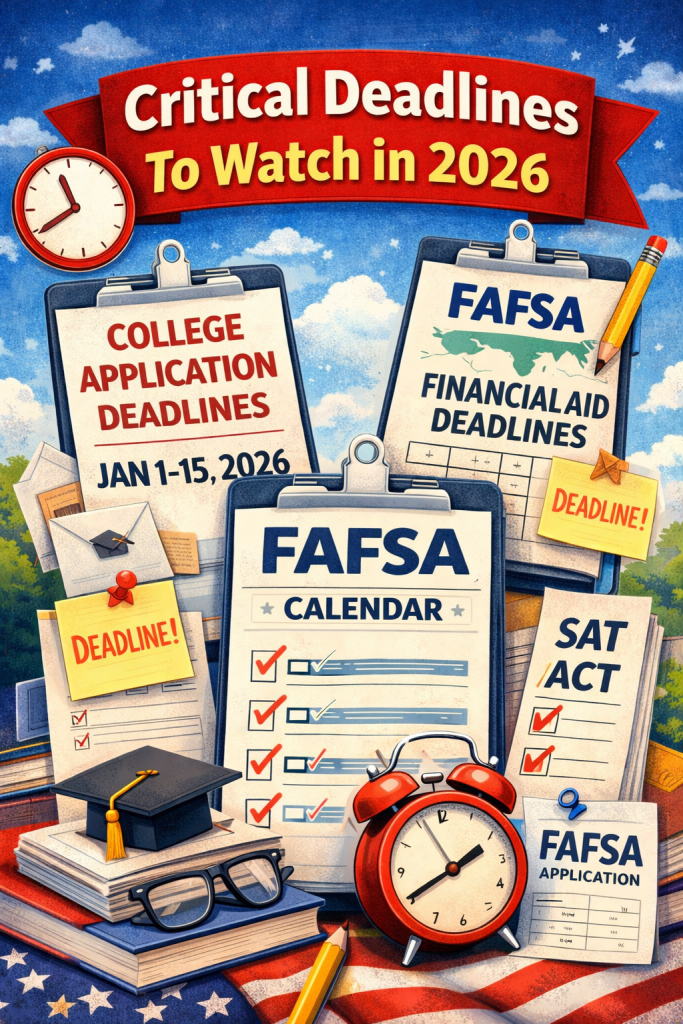
Once students move past the excitement of semester start dates and academic breaks, the real pressure points of the academic year begin to emerge. These are not holidays; they are responsibility-driven deadlines that can significantly influence academic trajectories, financial stability, and long-term opportunities. Understanding these deadlines early—and planning around them—is essential for success in the 2026 academic year.
College Application Deadlines: January 1–15, 2026
For high school seniors and transfer students, Regular Decision college application deadlines are among the most consequential dates of the year. Most U.S. colleges and universities set their Regular Decision deadlines between January 1 and January 15, 2026, although some institutions may extend slightly beyond this window.
These deadlines typically require submission of:
- Completed application forms
- Personal statements and supplemental essays
- Letters of recommendation
- Academic transcripts
- Standardized test scores (where applicable)
The challenge is that these applications often coincide with winter break and the start of the spring term, a period when students may already be managing coursework, exams, or travel. Procrastination during this phase can result in rushed essays, missed requirements, or weaker applications overall. Students who plan backward from these January deadlines—ideally beginning their essays months earlier—are far more likely to submit competitive applications.
FAFSA and Financial Aid Deadlines: State-Specific but Time-Sensitive
Financial aid deadlines are another critical component of the academic calendar that students often underestimate. The Free Application for Federal Student Aid (FAFSA) opens well before 2026, but state-specific and institution-specific deadlines vary widely.
Some states and universities allocate aid on a first-come, first-served basis, meaning delays can directly reduce the amount of financial assistance a student receives. Missing a deadline altogether may eliminate eligibility for grants, scholarships, or work-study programs.
Students should:
- Confirm FAFSA deadlines for their specific state and institution
- Gather financial documents early
- Submit applications as soon as possible, even if estimates are required
Financial stress is one of the leading contributors to academic difficulty. Treating financial aid deadlines with the same seriousness as exams or assignments can significantly improve both academic focus and overall well-being during the year.
Standardized Testing: SAT and ACT in Spring and Fall 2026
Although many institutions have adopted test-optional policies, SAT and ACT scores remain relevant for scholarships, honors programs, and selective admissions. In 2026, standardized testing is expected to follow a predictable pattern, with tentative test dates scheduled for both spring and fall.
Spring test dates are often used by:
- Juniors preparing for senior-year applications
- Students seeking to improve their prior scores
Fall test dates are typically targeted by:
- Seniors finalizing applications
- Transfer students strengthening their profiles
The key challenge with standardized testing is alignment. Test preparation often overlaps with demanding academic periods, including midterms and finals. Without proper planning, students may find themselves juggling exam prep alongside major coursework deadlines, leading to burnout or underperformance in both areas.
Success Tips for 2026 (Integrating GradeSmiths)
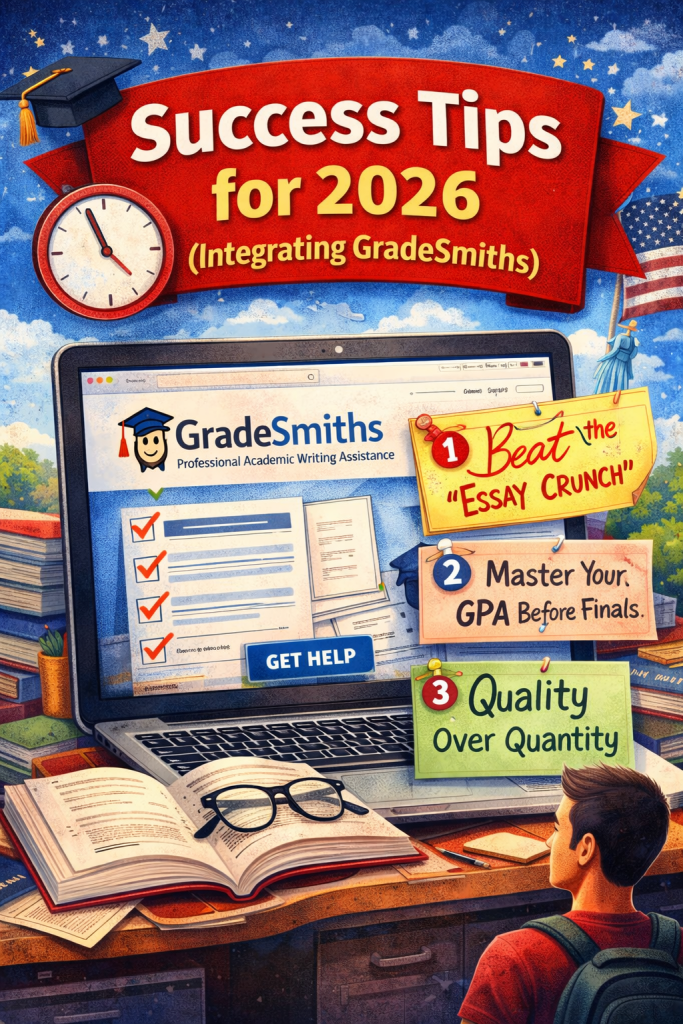
Knowing the deadlines is only half the battle. The real differentiator between students who struggle and those who succeed lies in how they manage the pressure surrounding these dates. This is where strategic academic support—particularly through platforms like GradeSmiths—can make a measurable difference.
Tip 1: Beat the “Essay Crunch”
One of the most predictable patterns in the academic year is the mid-semester pileup of assignments, especially during October and November in the fall term and March and April in the spring. Professors often schedule essays, research papers, and projects around the same time, creating an intense workload spike.
During these periods, many students resort to last-minute writing, sacrificing quality for speed. This is precisely where GradeSmiths becomes a lifesaver. Instead of pulling all-nighters or submitting rushed work, students can use GradeSmiths for professional editing or drafting assistance. This ensures essays remain coherent, well-structured, and academically sound—even when time is limited.
By offloading part of the writing burden, students can maintain balance, meet deadlines confidently, and avoid the cascading stress that often follows one missed assignment.
Tip 2: Master Your GPA Before Finals
By late April, a common realization sets in for many students: their GPA is not where they want it to be. At this stage, options become limited. Extra credit opportunities are rare, and finals carry disproportionate weight.
GradeSmiths helps students stay ahead of the curve by providing expert guidance on complex coursework early in the semester. Whether it is refining arguments, strengthening research methodology, or improving clarity and academic tone, early intervention prevents last-minute panic.
Students who use GradeSmiths proactively are not scrambling in May; they are refining strong work and entering finals week with confidence rather than desperation.
Tip 3: Choose Quality Over Quantity
Academic success is often misunderstood as working harder—more hours, more pages, more stress. In reality, long-term success is about working smarter. Submitting fewer but higher-quality assignments consistently outperforms rushed, error-filled work.
GradeSmiths acts as an academic partner, helping students elevate the quality of their research, arguments, and presentations. Rather than guessing what professors want, students receive structured, academically aligned support that improves outcomes across multiple courses.
This approach is particularly valuable in research-heavy disciplines, where clarity, evidence integration, and analytical depth matter more than volume.
Visualizing the 2026 Academic Flow
To truly understand the intensity of the 2026 academic year, it helps to visualize it as a series of rising and falling waves. Early semesters begin calmly, followed by sharp peaks during midterms, application deadlines, and finals. Breaks offer brief relief, but the cycle repeats with increasing intensity.
A simple timeline graphic—showing semester starts, major deadlines, and peak workload periods—can help students anticipate stress points rather than react to them. Planning support, study time, and academic assistance around these peaks is one of the most effective strategies for sustained performance.
Conclusion: Make 2026 Your Year
2026 is your year to shine. Mark these dates, set your goals, and approach the academic calendar with intention rather than anxiety. Deadlines will always exist, but how you handle them defines your success.
Let GradeSmiths handle the heavy lifting of academic writing, so you can focus on learning, growth, and achievement. Visit GradeSmiths today to get started and turn the challenges of 2026 into opportunities for excellence.
Frequently Asked Questions (FAQ)
· Why does the U.S. academic calendar seem so complicated compared to other countries?
The U.S. education system does not follow a single national academic calendar. Colleges and universities operate on different systems—most commonly semesters or quarters—and academic schedules vary by state, institution type, and program. This flexibility allows schools to tailor learning to their needs, but it also requires students to be more proactive in tracking dates and deadlines.
· Are the 2026 academic dates the same for every college and university?
No. While the blog outlines the general structure and major academic periods for 2026, exact dates may differ slightly between institutions. Students should always confirm official dates using their school’s academic calendar, especially for finals, breaks, and registration deadlines.
· When should students start preparing for college application deadlines in 2026?
Students should begin preparing for college applications several months before the January 1–15, 2026 Regular Decision deadlines. This includes drafting personal statements, requesting recommendation letters, and gathering transcripts early. Starting ahead of time reduces stress and significantly improves the quality of submitted applications.
· Why are FAFSA and financial aid deadlines so important?
Many forms of financial aid are awarded on a first-come, first-served basis, particularly at the state and institutional levels. Missing a FAFSA deadline can mean losing access to grants, scholarships, or work-study opportunities. Submitting financial aid applications early helps reduce financial stress and allows students to focus more fully on academics.
· How does GradeSmiths help during peak academic pressure periods?
GradeSmiths supports students during high-stress periods such as midterms, application season, and finals by offering professional assistance with academic writing. This includes drafting support, editing, and refining research papers. By reducing the writing burden, students can meet deadlines without sacrificing quality or well-being.
· Is using GradeSmiths considered academic dishonesty?
No. GradeSmiths functions as an academic support and guidance platform, similar to tutoring or writing centers offered by universities. It helps students improve clarity, structure, and academic standards in their work while allowing them to remain fully engaged in the learning process.
· When is the best time to use academic support services like GradeSmiths?
The most effective time to seek support is early in the semester, before deadlines become emergencies. Using GradeSmiths proactively helps students maintain strong grades, avoid last-minute stress, and enter finals season with confidence rather than panic.